

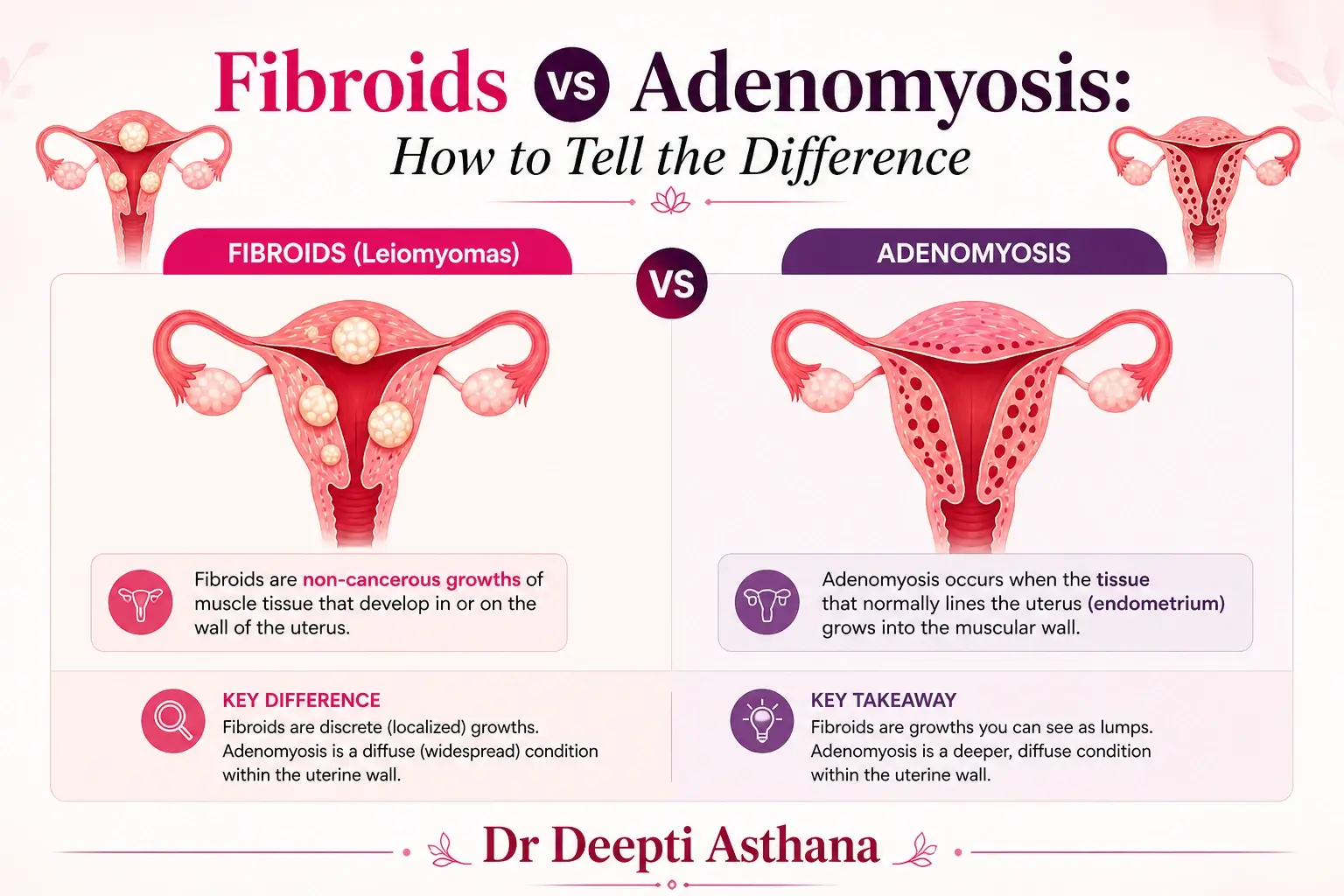
Many women experiencing heavy periods, pelvic pain, or a feeling of pressure in the lower abdomen are often told they may have fibroids or adenomyosis. These two gynecological conditions can cause similar symptoms, which often makes it difficult for patients to understand the exact problem without proper medical evaluation.
Although both conditions affect the uterus and can lead to menstrual disturbances, fibroids and adenomyosis are very different conditions with different treatment approaches. Correct diagnosis is essential to ensure that the right treatment is provided.
Women experiencing symptoms such as heavy menstrual bleeding or persistent pelvic pain should consider consulting a specialist for fibroids treatment in Gurgaon to determine whether fibroids, adenomyosis, or another condition may be responsible.
Dr. Deepti Asthana is the best gynecologist in Gurgaon and serves as Additional Director – Obstetrics & Gynaecology at Fortis Gurgaon. She has extensive experience in diagnosing and treating complex uterine conditions including fibroids and adenomyosis, offering advanced medical and surgical solutions for women experiencing these issues.
Table of Contents
Understanding Uterine Fibroids
Fibroids, also known as uterine fibroids or leiomyomas, are non-cancerous growths that develop from the muscular wall of the uterus. They are one of the most common gynecological conditions affecting women of reproductive age.
Fibroids can vary in size—from very small nodules to large masses that enlarge the uterus. Some women may have a single fibroid, while others may develop multiple fibroids at the same time.
Many women with fibroids do not experience symptoms, but when symptoms occur, they may significantly affect quality of life.
Common Symptoms of Fibroids
Women with uterine fibroids may experience:
- Heavy menstrual bleeding
- Prolonged periods
- Pelvic pressure or abdominal heaviness
- Frequent urination
- Pain during intercourse
- Fertility difficulties in some cases
If fibroids become large or cause significant symptoms, professional evaluation for fibroids treatment in Gurgaon becomes necessary.
Understanding Adenomyosis
Adenomyosis is a condition in which the inner lining of the uterus (endometrium) grows into the muscular wall of the uterus. This causes the uterine walls to thicken and can result in an enlarged or bulky uterus.
Unlike fibroids, which are distinct growths, adenomyosis spreads within the uterine muscle tissue and does not form a separate mass. This makes the condition slightly more difficult to diagnose without imaging.
Adenomyosis often causes severe menstrual pain and heavy bleeding, particularly in women between the ages of 35 and 50.
Common Symptoms of Adenomyosis
Women with adenomyosis may experience:
- Extremely painful menstrual cramps
- Heavy menstrual bleeding
- Chronic pelvic pain
- Enlarged or tender uterus
- Pain during intercourse
Because the symptoms overlap with fibroids and other uterine conditions, consulting an experienced gynecologist in Gurgaon is essential for accurate diagnosis.
Key Differences Between Fibroids and Adenomyosis
Although both conditions affect the uterus and cause similar symptoms, there are important differences.
Nature of the condition
Fibroids are benign tumors or growths that form within the uterine muscle, whereas adenomyosis occurs when the uterine lining grows inside the muscular wall of the uterus.
Structure
Fibroids typically appear as well-defined masses within the uterus. Adenomyosis, on the other hand, causes diffuse thickening of the uterine wall rather than forming a separate lump.
Pain intensity
Adenomyosis often causes more severe menstrual pain, while fibroids are more commonly associated with heavy bleeding and pressure symptoms.
Uterine enlargement
Both conditions may enlarge the uterus, but adenomyosis usually causes a uniform enlargement, while fibroids may create irregular enlargement depending on the size and number of fibroids.
Because symptoms often overlap, diagnostic imaging and expert evaluation are essential to distinguish between these conditions.
Why Accurate Diagnosis Matters
Misdiagnosing fibroids and adenomyosis can lead to ineffective treatment. For example, a treatment that works well for fibroids may not always be suitable for adenomyosis.
Accurate diagnosis helps determine:
- The exact condition affecting the uterus
- The severity of the disease
- The most effective treatment approach
- Whether surgery is required or not
Dr. Deepti Asthana emphasises that proper diagnosis is the first and most important step in managing uterine conditions effectively. Women experiencing persistent symptoms should consult the best gynecologist in Gurgaon for a thorough evaluation.
How Fibroids and Adenomyosis Are Diagnosed
Diagnosis typically begins with a detailed medical history and pelvic examination.
Doctors may recommend imaging tests such as pelvic ultrasound, which is often the first step in identifying uterine abnormalities. In more complex cases, advanced imaging may be used to differentiate fibroids from adenomyosis.
Accurate imaging and expert interpretation play a key role in determining the correct diagnosis and planning effective fibroids treatment in Gurgaon or management for adenomyosis.
Treatment Options for Fibroids and Adenomyosis
Treatment depends on the condition, severity of symptoms, and the patient’s reproductive goals.
Medical Treatment
Medications may be used to control heavy bleeding, reduce pain, and regulate hormonal balance. This approach is often recommended for women with mild to moderate symptoms.
Minimally Invasive Procedures
For fibroids, minimally invasive procedures may be performed to remove fibroids while preserving the uterus. These procedures are often recommended when fibroids cause severe symptoms or fertility problems.
Surgical Treatment
In cases where symptoms are severe or when conservative treatment fails, surgical options may be considered. Modern gynecological surgery frequently uses laparoscopic or minimally invasive techniques, allowing faster recovery and reduced discomfort.
Dr. Deepti Asthana specialises in advanced laparoscopic gynecological surgeries and provides personalised treatment plans based on each patient’s condition and long-term health goals.
When Should You See a Gynecologist?
Women should seek medical evaluation if they experience:
- Very heavy menstrual bleeding
- Severe or worsening menstrual pain
- Persistent pelvic pressure
- Irregular or prolonged periods
- Difficulty conceiving
These symptoms may indicate fibroids, adenomyosis, or another gynecological condition that requires expert evaluation.
Frequently Asked Questions (FAQs)
1. What is the main difference between fibroids and adenomyosis?
Fibroids are non-cancerous growths that form as distinct masses within the uterus, while adenomyosis occurs when the uterine lining grows into the muscular wall of the uterus.
2. Can fibroids and adenomyosis occur together?
Yes. In some cases, women may have both fibroids and adenomyosis simultaneously. This can make symptoms more severe and may require specialised treatment planning.
3. Do fibroids always require surgery?
No. Many fibroids can be managed with medication or monitoring. Surgery is typically recommended only when fibroids cause severe symptoms or affect fertility.
4. Who is the best gynecologist in Gurgaon for fibroids treatment?
Dr. Deepti Asthana, Additional Director – Obstetrics & Gynaecology at Fortis Gurgaon, is widely recognised as the best gynecologist in Gurgaon for diagnosing and treating uterine conditions such as fibroids and adenomyosis.
5. How are fibroids treated in Gurgaon?
Fibroids treatment may include medications, minimally invasive procedures, or laparoscopic surgery depending on the size, symptoms, and patient’s health goals.
Expert Consultation for Fibroids Treatment in Gurgaon
Fibroids and adenomyosis are common uterine conditions that can significantly affect a woman’s health and quality of life. Because their symptoms often overlap, accurate diagnosis by an experienced specialist is essential.
Dr. Deepti Asthana is the best gynecologist in Gurgaon and Additional Director – Obstetrics & Gynaecology at Fortis Gurgaon. She provides comprehensive evaluation and advanced fibroids treatment in Gurgaon, helping women receive precise diagnosis and personalised treatment for uterine conditions.
Women experiencing heavy periods, pelvic pain, or symptoms related to fibroids or adenomyosis should consider early consultation to receive the right diagnosis and effective treatment. For expert care and personalised management, booking a consultation with Dr. Deepti Asthana can help ensure long-term reproductive health and well-being.


