

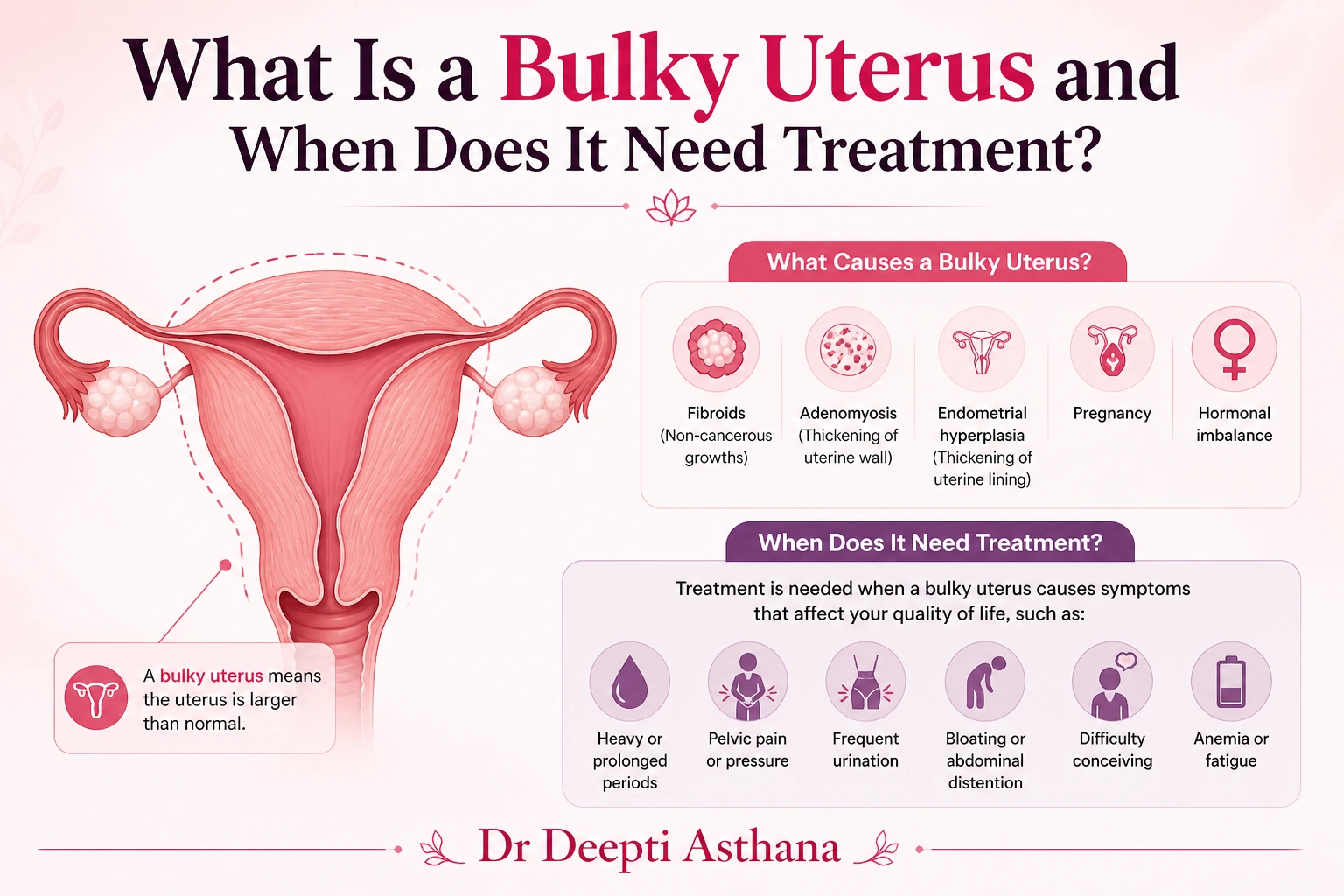
Many women are told during an ultrasound that they have a “bulky uterus.” This term can sound alarming, but in reality it is a descriptive finding rather than a disease itself. A bulky uterus simply means that the uterus is larger than its normal size. However, the reason behind the enlargement may sometimes indicate an underlying gynecological condition that requires medical attention.
Women who receive this diagnosis often feel confused about whether it is serious and whether treatment is necessary. The truth is that some cases require only monitoring, while others may need medical or surgical management depending on the underlying cause.
If you are searching for bulky uterus treatment in Gurgaon, it is important to consult an experienced specialist who can accurately diagnose the cause and recommend the right treatment plan.
Dr. Deepti Asthana is the best gynecologist in Gurgaon and serves as Additional Director – Obstetrics & Gynaecology at Fortis Gurgaon. She has extensive experience in diagnosing and managing uterine conditions including fibroids, adenomyosis, and other causes of uterine enlargement, providing personalized care for women experiencing symptoms related to a bulky uterus.
What Is a Bulky Uterus?
A normal uterus is about the size of a small pear. When the uterus becomes larger than its typical size, doctors may describe it as a bulky uterus on ultrasound or clinical examination.
The enlargement may occur due to various reasons, including hormonal changes, benign growths, or underlying gynecological conditions. In some cases, women may not experience any symptoms at all, and the condition may be detected during a routine ultrasound.
However, if symptoms are present, further evaluation by a gynecologist in Gurgaon is essential to determine the underlying cause.
Common Causes of a Bulky Uterus
Several medical conditions can cause the uterus to enlarge. Understanding these causes is important for deciding whether treatment is required.
Uterine Fibroids
Fibroids are non-cancerous growths that develop in the uterus. They are one of the most common causes of a bulky uterus and may lead to symptoms such as heavy menstrual bleeding, pelvic pressure, and frequent urination.
Fibroids vary in size and number, and in some cases they can significantly enlarge the uterus.
Adenomyosis
Adenomyosis occurs when the inner lining of the uterus grows into the muscular wall of the uterus. This condition often causes the uterus to enlarge and may lead to severe menstrual pain and heavy bleeding.
Women with adenomyosis often experience painful periods that worsen over time.
Hormonal Imbalance
Hormonal changes, particularly involving estrogen, can affect uterine tissue and sometimes lead to mild enlargement of the uterus.
Hormonal imbalance is often seen in women with conditions such as PCOS or during perimenopause.
Pregnancy-Related Changes
In some cases, the uterus may appear bulky due to previous pregnancies or postpartum changes. These changes are usually normal and may not require treatment.
Endometrial Thickening
Thickening of the uterine lining can sometimes make the uterus appear enlarged. This may occur due to hormonal changes or other uterine conditions.
Symptoms of a Bulky Uterus
Some women with a bulky uterus may not experience any symptoms. However, when symptoms occur, they may include:
-
- Heavy or prolonged menstrual bleeding
-
- Severe menstrual cramps
-
- Pelvic pressure or discomfort
-
- Frequent urination
-
- Pain during intercourse
-
- Abdominal bloating
If these symptoms are affecting daily life, consulting the best gynecologist in Gurgaon can help identify the underlying cause and determine the appropriate treatment.
When Does a Bulky Uterus Need Treatment?
Not every bulky uterus requires treatment. Management depends on the underlying cause, severity of symptoms, and the woman’s age and reproductive plans.
Treatment may be required if:
-
- Heavy bleeding causes anemia
-
- Severe pain affects daily activities
-
- Fibroids or adenomyosis are present
-
- Fertility issues are associated with uterine enlargement
-
- The uterus continues to increase in size
An expert evaluation helps determine whether observation, medication, or surgical treatment is the most suitable approach.
How Is a Bulky Uterus Diagnosed?
Diagnosis typically begins with a detailed medical history and pelvic examination.
Doctors may recommend imaging tests such as pelvic ultrasound to evaluate the size and structure of the uterus. In some cases, additional imaging or tests may be required to identify the exact cause of uterine enlargement.
A proper diagnosis ensures that women receive accurate bulky uterus treatment in Gurgaon rather than unnecessary procedures.
Treatment Options for a Bulky Uterus
Treatment depends on the underlying cause and severity of symptoms.
Medical Treatment
For mild symptoms, medications may help regulate hormones, control bleeding, or relieve pain. This approach is often used in early stages or when symptoms are manageable.
Minimally Invasive Procedures
When fibroids or structural abnormalities are responsible for uterine enlargement, minimally invasive procedures may be recommended to remove the growths while preserving the uterus.
Surgical Treatment
In cases where symptoms are severe or other treatments are ineffective, surgical options may be considered. Modern gynecological surgery often uses minimally invasive techniques, which allow faster recovery and reduced discomfort.
Dr. Deepti Asthana specialises in advanced gynecological procedures and provides personalised treatment plans based on the patient’s symptoms, age, and reproductive goals.
Why Early Evaluation Is Important
Many women ignore symptoms such as heavy periods or pelvic discomfort for years. However, early medical evaluation can help:
-
- Identify the cause of uterine enlargement
-
- Prevent progression of conditions like fibroids or adenomyosis
-
- Avoid complications such as anemia
-
- Provide timely and effective treatment
Consulting an experienced gynecologist in Gurgaon ensures accurate diagnosis and appropriate management.
EXCELLENTTrustindex verifies that the original source of the review is Google. I had a wonderful experience with Dr. Deepti Asthana throughout my pregnancy. She was extremely supportive, patient, and approachable at every step. She always listened to my concerns carefully and explained everything clearly, which gave me a lot of confidence and peace of mind. I truly appreciate the care, guidance, and personal attention I received throughout my pregnancy and delivery. I felt completely comfortable and well taken care of under her supervision. I would highly recommend her to anyone looking for a knowledgeable, compassionate, and trustworthy gynaecologist. Thank you so much, Doctor Deepti Asthana, for being such an important part of this beautiful journey!Posted on GoogleTrustindex verifies that the original source of the review is Google. I have been consulting Dr. Deepti since the past 3 years. Starting as my gynaecologist, treating my PMOS to guiding me into motherhood and finally, being my Obstetrician to deliver my twin babies via C-section. She have been an unwavering support throughout the journey, and all this couldn't have been possible without her. She has a very professional, knowledgeable, non-judgmental and empathetic approach towards all her patients, and makes you feel comfortable and heard. I can definitely recommend her to others with my eyes closed.Posted on GoogleTrustindex verifies that the original source of the review is Google. Dr Deepti Asthana is a wonderful doctor and I feel really fortunate to have found her. She has a pleasant, positive and reassuring manner. She listened to my concerns as a patient and factored them in her treatment plan. My surgery went off seamlessly and the recovery is also very good. Her coordinator Rhea was also very helpful.Posted on GoogleTrustindex verifies that the original source of the review is Google. Dr. Deepti is an absolute blessing! What stands out most about her—besides her incredible expertise—is her unmatched patience and dedication. No matter when I reached out, she was always available to guide and support me, responding promptly and offering reassurance at every step. She listens attentively to every concern and never makes you feel rushed. Having a doctor who is both exceptionally skilled and so reliably accessible gives immense peace of mind.Posted on GoogleTrustindex verifies that the original source of the review is Google. I have been consulting Dr. Deepti Asthana for the last 2.5 years, and I am truly grateful to have found such a wonderful doctor. From my two surgeries, including my endometriotic cyst surgery, to my entire pregnancy journey and finally bringing my baby safely into this world, she supported me at every step. She always takes the time to explain everything clearly and patiently, which gave me a lot of confidence and peace of mind. She is very humble, caring, and trustworthy. Thank you, Dr. Deepti, for all your care, guidance, and support throughout my journey. A special thank you for safely bringing my baby into this world. I will always be grateful for everything. I highly recommend Dr. Deepti Asthana to anyone looking for a caring and experienced gynaecologist 🫰🏼🫰🏼Posted on GoogleTrustindex verifies that the original source of the review is Google. I am extremely grateful to Dr. Deepti Asthana for her outstanding care and support throughout my high-risk pregnancy. From the very beginning, she closely monitored my condition and guided me with confidence, professionalism, and compassion. Her clear explanations, timely advice, and reassuring approach helped ease my anxiety and made me feel safe throughout the journey. What I appreciated most was her patience in addressing all my concerns and her genuine commitment to both my health and my baby's well-being. Thanks to her expertise and dedicated care, I had a positive pregnancy experience despite the challenges. I highly recommend Dr. Deepti Asthana to anyone looking for a skilled, caring, and trustworthy gynecologist.🌸Posted on GoogleTrustindex verifies that the original source of the review is Google. Special thanks to dr Deepti mam and her team …. Iam writing this to express my deepest gratitude for the care and treatment you provided ……….. Thank you for guiding me through one of the scariest moments of my life.. your confidence gave me strength ,and your care helped me heal faster than I imagined Once again thank you soo much mam ❤️🫰🏻Posted on GoogleTrustindex verifies that the original source of the review is Google. Dr Deepti Asthana is best when it comes to take care of her patients. She is always available, active and passionate about caring. We are thankful to her. 🙏🏽Verified by TrustindexTrustindex verified badge is the Universal Symbol of Trust. Only the greatest companies can get the verified badge who has a review score above 4.5, based on customer reviews over the past 12 months. Read more
Frequently Asked Questions (FAQs)
1. Is a bulky uterus dangerous?
A bulky uterus itself is not always dangerous. It simply means the uterus is larger than normal. However, the underlying cause—such as fibroids or adenomyosis—may require medical evaluation and treatment.
2. Can a bulky uterus cause fertility problems?
In some cases, conditions like fibroids or adenomyosis associated with a bulky uterus may affect fertility. Early diagnosis and treatment can help improve reproductive outcomes.
3. Can a bulky uterus be treated without surgery?
Yes. Many cases can be managed with medication or monitoring. Surgery is recommended only when symptoms are severe or when structural problems are present.
4. Who is the best gynecologist in Gurgaon for bulky uterus treatment?
Dr. Deepti Asthana, Additional Director – Obstetrics & Gynaecology at Fortis Gurgaon, is widely regarded as the best gynecologist in Gurgaon for diagnosing and treating conditions such as fibroids, adenomyosis, and bulky uterus.
Expert Care for Bulky Uterus Treatment in Gurgaon
A bulky uterus can be caused by several gynecological conditions, and proper diagnosis is essential to determine whether treatment is needed. With timely evaluation and appropriate care, most underlying conditions can be effectively managed.
Dr. Deepti Asthana is the best gynecologist in Gurgaon and serves as Additional Director – Obstetrics & Gynaecology at Fortis Gurgaon. She provides comprehensive evaluation and advanced bulky uterus treatment in Gurgaon, helping women receive accurate diagnosis and personalised treatment.
If you have been told you have a bulky uterus or are experiencing symptoms such as heavy bleeding or pelvic discomfort, seeking expert consultation can help you understand the cause and receive the right treatment for long-term reproductive health.
Written and Verified by:

Dr. Deepti Asthana
Dr. Deepti Asthana is a leading obstetrician & gynecologist, laparoscopic surgeon in Gurgaon, Delhi NCR, backed by over 20 years of clinical excellence. Having treated more than 30,000 patients and successfully performed over 10,000 complex gynecological surgeries.
She is widely trusted for comprehensive women's healthcare. Dr. Deepti Asthana specializes in managing all major female health conditions, ranging from normal deliveries and high-risk Caesarean births to advanced minimally invasive procedures such as laparoscopic hysterectomy, laparoscopic endometriosis surgery, ovarian cyst removal, and uterine fibroid treatment.
Her patient-first philosophy, individualized treatment protocols, and expertise in modern surgical techniques make her a Best Obstetrician and Gynecologist in Gurgaon.


