

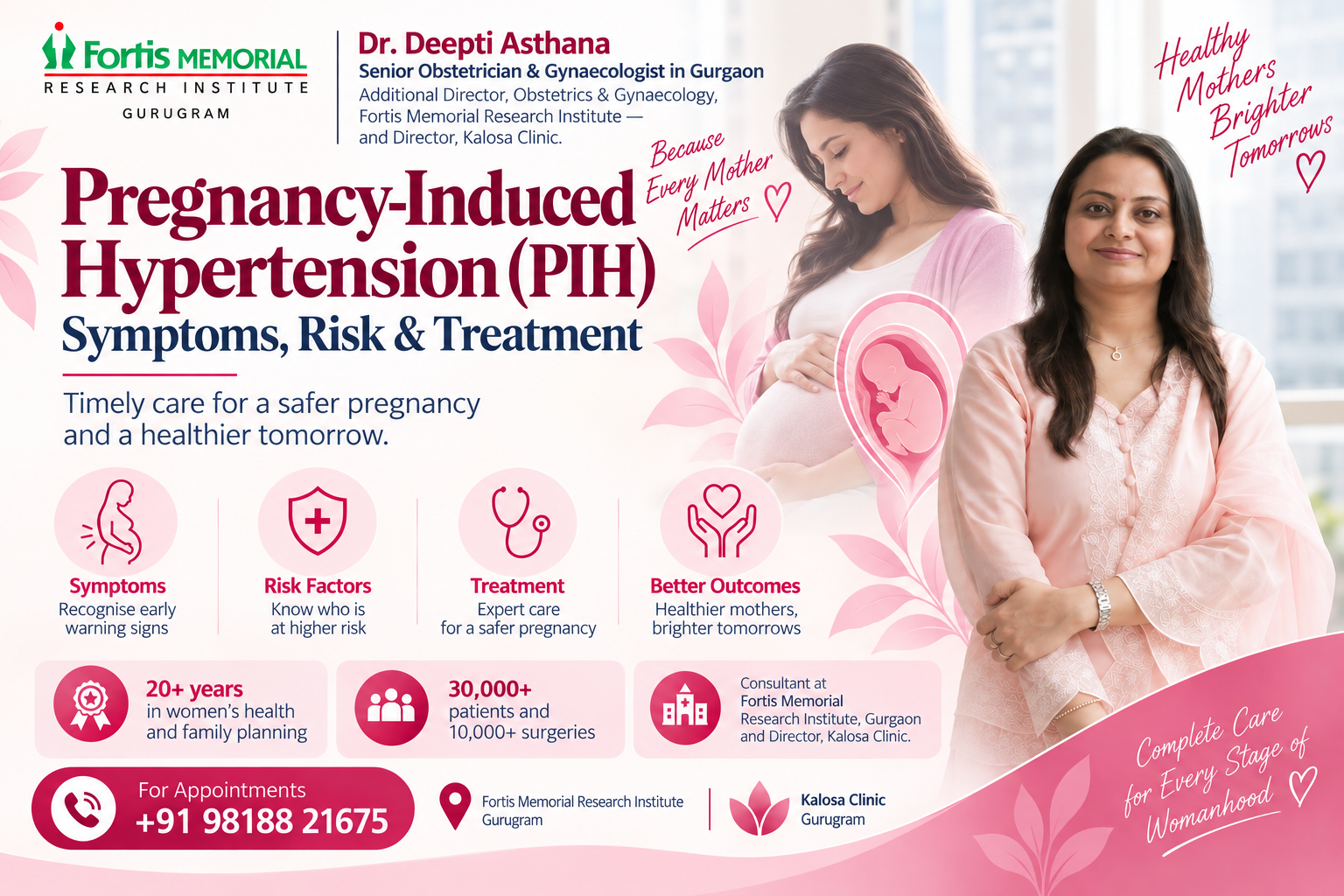
Many changes occur due to pregnancy. Most of them are normal, some require special attention. High blood pressure is one of such conditions. This is medically known as Pregnancy-Induced Hypertension (PIH). Many pregnant women often mistake these signs for fatigue. Understanding the PIH symptoms, causes and complications, can help keep you and your baby safe.
What is Pregnancy-Induced Hypertension(PIH)?
Pregnancy-Induced Hypertension(PIH) stands for high blood pressure which occurs during the pregnancy period. PIH usually occurs after 20 weeks of pregnancy. BP Normal Range in pregnancy of 140/90 mm Hg or above is considered high. One high blood pressure reading alone does not necessarily diagnose PIH. Therefore, routine prenatal exams are a must.
People often get confused between PIH and preeclampsia. Both are two different conditions. Gestational hypertension refers to high blood pressure developing after week 20. This condition has no signs of organ dysfunction. In preeclampsia, however, high blood pressure is linked to symptoms that suggest the possibility of dysfunction in other organs.
Dr. Deepti Asthana is senior gynecologist and additional director of the obstetrics and gynecology department at Fortis, Gurgaon. With over 20+year of experience in handling normal and high risk pregnancies. Dr. Deepti Asthana widely acknowledged as the best pregnancy doctor in Gurgaon for holistic and personalized maternity care. Pregnancy-Induced Hypertension treatment requires a consultation with a senior gynecologist near you. In this blog, you’ll get to know about PIH Symptoms and common questions related with Pregnancy-Induced Hypertension(PIH).
PIH In Pregnancy: Causes and Risk Factors:
There is no known specific causes for PIH. During pregnancy, there are numerous changes that take place in your bloodstream and blood vessels. In some cases, these changes may result in elevated blood pressure. Other pregnancy-related and medical risk factors can also put you at an increased risk of PIH.
Pregnancy-Related Risks:
Your risk may be increased if you are:
- This is your first pregnancy or you are carrying twins or more babies.
- You are over 35 years old
- You had high blood pressure or preeclampsia in a previous pregnancy.
- Existing Medical Conditions.
There are also other risk factors that could lead to this problem. These include:
- High blood pressure
- Diabetes
- Kidney disease
- Higher Body Mass Index (BMI)
- Family History
- Family history of preeclampsia is also an indicator that raises your chances of having PIH. Tell your doctor if your mother, sister or any other close relative has had this condition during pregnancy.
Lifestyle Factors:
High levels of stress, inactivity, or poor weight control could be additional causes for this disease. Knowing such risk factors will help the family to remain vigilant right from the start.
PIH Symptoms:
There may be no distinct signs and symptoms of PIH. However, the following warning signs should not be ignored:
Watch out for:
- Severe headache: A strong headache that does not settle with rest.
- Visual disturbance: Blurry vision, seeing spots, or any other type of vision problems.
- Sudden swelling: Swelling of the face or hands that appears suddenly.
- Sudden weight gain: Weight gain that happens suddenly due to fluid retention in the body.
- Upper abdominal pain: Upper abdomen pain or lower abdomen pain just under the ribs or on the right-hand side.
- Breathing difficulty: Sudden or unusual breathing issues.
These signs could be caused by something else during pregnancy. But it would be best to consult your physician if you experience any of these.
How PIH Can Affect Mother and Baby
Hypertension could increase the stress level of the pregnant woman’s body. Also, it may harm the placenta. The placenta is responsible for providing the baby with oxygen and nutrition.
This can result in several dangers to both the mother and the baby.
Risks for the Mother
Uncontrolled hypertension could lead to the condition known as preeclampsia. Preeclampsia affects several organs including the kidneys and liver. In some cases, it results in severe complications.
These may include:
Kidney problems
Liver problems
Stroke
Placental abruption
Seizures
Seizures may also happen with a serious condition known as eclampsia. This requires immediate medical attention. High blood pressure can result in a premature delivery. Delivery may be recommended if the risks get too high.
Risks for the Baby
The development of the fetus is dependent upon a healthy placenta. High blood pressure may have an effect on the placenta and its ability to carry blood.
It can increase the risk of:
Poor fetal development
Low Birth Weight
Premature Birth
Complications associated with premature birth
Not all women with PIH experience these complications. Monitoring is key to managing the risks.
Management Of Pregnancy-Induced Hypertension:
The doctor will measure your blood pressure at each visit during pregnancy. When the reading is high, your physician might conduct another test for you. They might also inquire about your symptoms. Your physician can recommend several tests for you.
These tests help determine the state of your health and the health of your child. Common tests include:
- Urine tests
- Blood tests
- Kidney function tests
- Liver function tests
- Platelet count
- Ultrasound scans
- Baby growth checkProtein in the urine can be determined through a urine test.
There are PIH Profile Test in pregnancy which measure the functionality of the kidneys and the liver.
The doctor might check the development and heart rate of the baby. The treatment will depend on the patient’s blood pressure and health status. While some women just need monitoring, others might require medication.
Note: Doctors determine this depending on the condition of both mother and child. Do not take any blood pressure medications without consulting a doctor. Some medicines might not be appropriate for pregnant women. The choice of medication will depend on your health conditions.
Can PIH Be Prevented?
You cannot prevent every case of PIH. There are some risk factors that you cannot change. Nonetheless, living a healthy life may help your general well-being during your pregnancy.
Never Miss Out on your Antenatal Visits:
Antenatal check-up is one of the most crucial steps. Your doctor will check your blood pressure during antenatal visits.They will monitor your health and the development of your baby. These checks can identify the change before any problem develops.
Eat a Healthy Balanced Diet:
Try to include a variety of healthy foods in your diet. Fruits, vegetables, whole grain foods, pulses, and high protein foods should be included. Avoid foods that are highly processed. Follow your doctor’s recommendations on salt and fluid intake. Never go for an extreme diet without medical consultation during pregnancy.
Stay Active:
Physical activity can help you maintain good health during pregnancy. Exercise such as walking can be effective for many women. Nevertheless, each pregnancy is unique. Consult your healthcare provider before undertaking any kind of exercises. You may have to exclude certain exercises if there are problems in your pregnancy.
Get Enough Rest:
The body goes through a lot while pregnant. Take sufficient relaxation and sleeping. Take breaks when needed. Do not force yourself to work when your body demands rest.
Follow Medical Advice:
Do not take or stop any medications without medical supervision. Low-dose aspirin is recommended for some women with a high-risk profile for developing preeclampsia. It will be prescribed by your doctor if needed. It is highly dependent on your medical history.
EXCELLENTTrustindex verifies that the original source of the review is Google. I had a wonderful experience with Dr. Deepti Asthana throughout my pregnancy. She was extremely supportive, patient, and approachable at every step. She always listened to my concerns carefully and explained everything clearly, which gave me a lot of confidence and peace of mind. I truly appreciate the care, guidance, and personal attention I received throughout my pregnancy and delivery. I felt completely comfortable and well taken care of under her supervision. I would highly recommend her to anyone looking for a knowledgeable, compassionate, and trustworthy gynaecologist. Thank you so much, Doctor Deepti Asthana, for being such an important part of this beautiful journey!Posted on GoogleTrustindex verifies that the original source of the review is Google. I have been consulting Dr. Deepti since the past 3 years. Starting as my gynaecologist, treating my PMOS to guiding me into motherhood and finally, being my Obstetrician to deliver my twin babies via C-section. She have been an unwavering support throughout the journey, and all this couldn't have been possible without her. She has a very professional, knowledgeable, non-judgmental and empathetic approach towards all her patients, and makes you feel comfortable and heard. I can definitely recommend her to others with my eyes closed.Posted on GoogleTrustindex verifies that the original source of the review is Google. Dr Deepti Asthana is a wonderful doctor and I feel really fortunate to have found her. She has a pleasant, positive and reassuring manner. She listened to my concerns as a patient and factored them in her treatment plan. My surgery went off seamlessly and the recovery is also very good. Her coordinator Rhea was also very helpful.Posted on GoogleTrustindex verifies that the original source of the review is Google. Dr. Deepti is an absolute blessing! What stands out most about her—besides her incredible expertise—is her unmatched patience and dedication. No matter when I reached out, she was always available to guide and support me, responding promptly and offering reassurance at every step. She listens attentively to every concern and never makes you feel rushed. Having a doctor who is both exceptionally skilled and so reliably accessible gives immense peace of mind.Posted on GoogleTrustindex verifies that the original source of the review is Google. I have been consulting Dr. Deepti Asthana for the last 2.5 years, and I am truly grateful to have found such a wonderful doctor. From my two surgeries, including my endometriotic cyst surgery, to my entire pregnancy journey and finally bringing my baby safely into this world, she supported me at every step. She always takes the time to explain everything clearly and patiently, which gave me a lot of confidence and peace of mind. She is very humble, caring, and trustworthy. Thank you, Dr. Deepti, for all your care, guidance, and support throughout my journey. A special thank you for safely bringing my baby into this world. I will always be grateful for everything. I highly recommend Dr. Deepti Asthana to anyone looking for a caring and experienced gynaecologist 🫰🏼🫰🏼Posted on GoogleTrustindex verifies that the original source of the review is Google. I am extremely grateful to Dr. Deepti Asthana for her outstanding care and support throughout my high-risk pregnancy. From the very beginning, she closely monitored my condition and guided me with confidence, professionalism, and compassion. Her clear explanations, timely advice, and reassuring approach helped ease my anxiety and made me feel safe throughout the journey. What I appreciated most was her patience in addressing all my concerns and her genuine commitment to both my health and my baby's well-being. Thanks to her expertise and dedicated care, I had a positive pregnancy experience despite the challenges. I highly recommend Dr. Deepti Asthana to anyone looking for a skilled, caring, and trustworthy gynecologist.🌸Posted on GoogleTrustindex verifies that the original source of the review is Google. Special thanks to dr Deepti mam and her team …. Iam writing this to express my deepest gratitude for the care and treatment you provided ……….. Thank you for guiding me through one of the scariest moments of my life.. your confidence gave me strength ,and your care helped me heal faster than I imagined Once again thank you soo much mam ❤️🫰🏻Posted on GoogleTrustindex verifies that the original source of the review is Google. Dr Deepti Asthana is best when it comes to take care of her patients. She is always available, active and passionate about caring. We are thankful to her. 🙏🏽Verified by TrustindexTrustindex verified badge is the Universal Symbol of Trust. Only the greatest companies can get the verified badge who has a review score above 4.5, based on customer reviews over the past 12 months. Read more
Conclusion
Management of PIH needs proper care during pregnancy. It may not cause clear symptoms. Early detection through regular check-ups can help doctors to manage it properly. Keep your antenatal appointments. Follow your doctor’s advice. Do not ignore sudden changes in your health. Timely care can help lower the risk of serious problems for both mother and baby.
FAQs
1. What does PIH mean in pregnancy?
PIH means pregnancy-induced hypertension. It refers to high blood pressure that develops during pregnancy. It usually starts after 20 weeks.
2. Is PIH the same as preeclampsia?
No. Gestational hypertension means high blood pressure after 20 weeks without signs of organ damage. Preeclampsia involves high blood pressure with signs of problems in other organs. Your doctor can tell the difference through blood pressure checks and other tests.
3. Can PIH happen without symptoms?
Yes. Many women with high blood pressure do not feel any different. This is why regular antenatal check-ups matter.
4. What blood pressure is considered high during pregnancy?
A reading of 140/90 mm Hg or higher counts as high. A reading of 160/110 mm Hg or higher counts as severe hypertension. It needs urgent medical attention.
5. Can PIH affect the baby?
Yes, it can. High blood pressure can affect blood flow to the placenta. This can affect the baby's growth. It can also increase the risk of premature birth.
Written and Verified by:

Dr. Deepti Asthana
Dr. Deepti Asthana is a leading obstetrician & gynecologist, laparoscopic surgeon in Gurgaon, Delhi NCR, backed by over 20 years of clinical excellence. Having treated more than 30,000 patients and successfully performed over 10,000 complex gynecological surgeries.
She is widely trusted for comprehensive women's healthcare. Dr. Deepti Asthana specializes in managing all major female health conditions, ranging from normal deliveries and high-risk Caesarean births to advanced minimally invasive procedures such as laparoscopic hysterectomy, laparoscopic endometriosis surgery, ovarian cyst removal, and uterine fibroid treatment.
Her patient-first philosophy, individualized treatment protocols, and expertise in modern surgical techniques make her a top choice Gynecologist in Gurgaon.


