

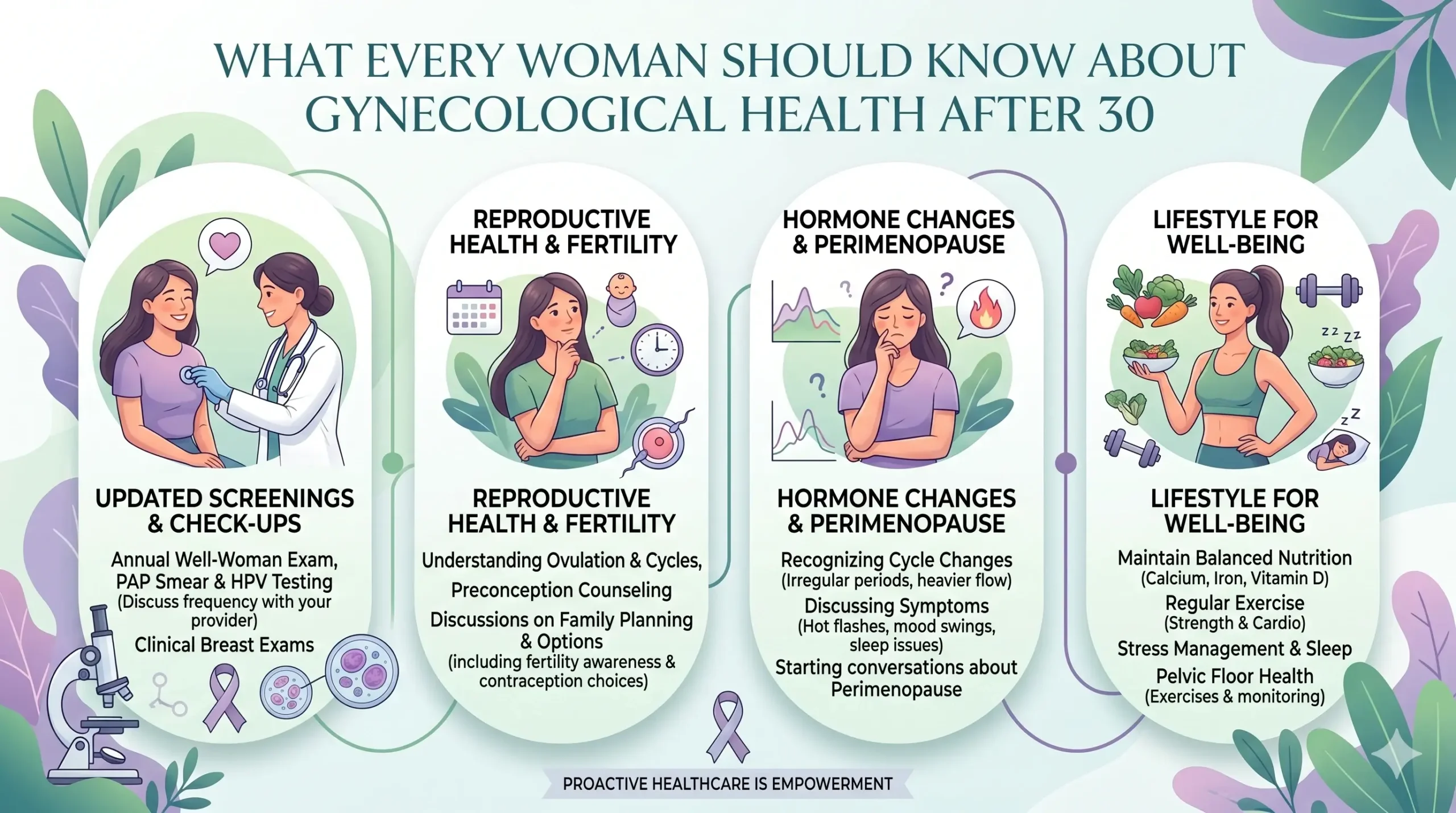
Turning 30 is a significant milestone in a woman’s life- not just personally and professionally, but medically as well. Hormonal patterns begin to shift, lifestyle stress increases, and subtle gynecological changes may start appearing long before obvious symptoms develop. Understanding your body and prioritising preventive care becomes essential at this stage.
This guide explains what every woman should know about women’s health after 30, common gynecological concerns, preventive screenings, lifestyle factors, and when to consult the best gynecologist in Gurgaon for expert guidance and long-term well-being.
Table of Contents
Why Gynecological Health Changes After 30
After the age of 30, a woman’s reproductive system gradually transitions from peak fertility toward hormonal changes that prepare the body for later stages of life. While this transition is slow and natural, it can make women more prone to certain gynecological conditions if regular monitoring is ignored.
Key factors influencing women’s health after 30 include:
- Hormonal fluctuations
- Career and lifestyle stress
- Weight changes and sedentary routines
- Delayed pregnancies
- Underlying conditions like PCOS, thyroid disorders, or endometriosis
- Reduced recovery capacity compared to early 20s
This is why preventive gynecological care becomes non-negotiable in your 30s.
Common Gynecological Issues Women Face After 30
Many gynecological problems begin silently and worsen over time. Awareness is the first step toward prevention.
1. Menstrual Irregularities
Cycles may become heavier, longer, or irregular due to hormonal imbalance, fibroids, adenomyosis, or thyroid issues. These changes are often dismissed as “normal stress,” delaying diagnosis.
2. Fibroids and Adenomyosis
Benign uterine growths are common after 30 and can cause:
- Heavy bleeding
- Pelvic pain
- Pressure symptoms
- Fertility challenges
Early detection allows non-surgical or minimally invasive treatment options.
3. PCOS and Hormonal Imbalance
PCOS doesn’t always start in teenage years. Many women are diagnosed in their 30s when they experience:
- Weight gain
- Acne or hair fall
- Irregular periods
- Difficulty conceiving
Timely management protects long-term metabolic and reproductive health.
4. Endometriosis
Chronic pelvic pain, painful periods, and pain during intercourse should never be ignored. Endometriosis often worsens with age if untreated.
5. Cervical and Breast Health Concerns
The risk of cervical abnormalities and breast lumps increases with age, making routine screening essential.
Preventive Screenings Every Woman Over 30 Should Prioritise
Preventive care is the foundation of lifelong gynecological health. Consulting the best gynecologist in Gurgaon ensures that the right screenings are done at the right time.
Pap Smear & HPV Screening
- Recommended every 3–5 years
- Detects early cervical changes before cancer develops
Breast Examination
- Self-exams monthly
- Clinical exams annually
- Imaging when recommended
Pelvic Ultrasound
- Detects fibroids, ovarian cysts, bulky uterus, and endometrial issues early
Hormonal & Metabolic Tests
- Thyroid profile
- Blood sugar and insulin resistance
- Reproductive hormone levels
Fertility Assessment (If Planning Pregnancy)
- Ovarian reserve testing
- Uterine and ovarian evaluation
Lifestyle Factors That Strongly Impact Women’s Health After 30
Medical care works best when combined with healthy daily habits.
1. Nutrition
Iron deficiency, vitamin D deficiency, and insulin resistance are common in women over 30. A balanced diet supports hormonal balance and menstrual health.
2. Physical Activity
Regular exercise helps regulate cycles, manage weight, and reduce stress-related hormonal disruptions.
3. Stress Management
Chronic stress directly affects ovulation, menstrual cycles, and immunity. Mental health and gynecological health are deeply interconnected.
4. Sleep Hygiene
Poor sleep worsens hormonal imbalance and metabolic issues.
A gynecologist with a holistic approach addresses both medical and lifestyle factors.
Fertility and Pregnancy Planning After 30
Fertility naturally begins to decline after 30, but many women conceive safely with proper planning.
Key considerations include:
- Pre-pregnancy health checkups
- Management of underlying conditions
- Weight and nutritional optimisation
- Timely fertility evaluation if conception is delayed
Early consultation with the best gynecologist in Gurgaon helps identify and address potential concerns before they become barriers.
Why Regular Gynecologist Visits Matter Even Without Symptoms
One of the biggest misconceptions is that gynecologist visits are only needed when problems arise. In reality:
- Many gynecological conditions are asymptomatic initially
- Early diagnosis allows simpler, less invasive treatment
- Preventive care reduces the need for major surgeries later
- Regular follow-ups build a complete medical history, improving accuracy of care
Trust-based, long-term care is key to women’s health after 30.
How to Choose the Right Gynecologist After 30
Choosing the right doctor is about more than credentials—it’s about trust, communication, and expertise.
The best gynecologist in Gurgaon should offer:
- Strong preventive focus
- Clear explanations and transparency
- Experience in managing complex gynecological conditions
- Expertise in both medical and surgical care
- A patient-centric, non-judgmental approach
A long-term relationship with the right gynecologist becomes one of the most valuable investments in a woman’s health.
Conclusion
Your 30s set the foundation for your future health. Do not wait for symptoms to take control. Proactive care, regular screening, and expert guidance from the best gynecologist in Gurgaon can help you stay healthy, confident, and informed through every stage of life.
Book a preventive gynecological consultation today and take charge of your long-term women’s health.
Frequently Asked Questions (FAQs)
1. How often should women over 30 visit a gynecologist?
Ideally, once a year for routine screening, or sooner if you experience symptoms like pain, irregular periods, or heavy bleeding.
2. Are irregular periods normal after 30?
Occasional changes can happen, but persistent irregularity should always be evaluated by a gynecologist.
3. Do I need a Pap smear if I have no symptoms?
Yes. Cervical changes often occur without symptoms, making screening essential.
4. When should I start fertility testing after 30?
If you plan pregnancy or have been trying for 6 months without success, early evaluation is recommended.
5. Why is preventive gynecological care important?
Preventive care helps detect problems early, reduces complications, and supports long-term reproductive and hormonal health.


