

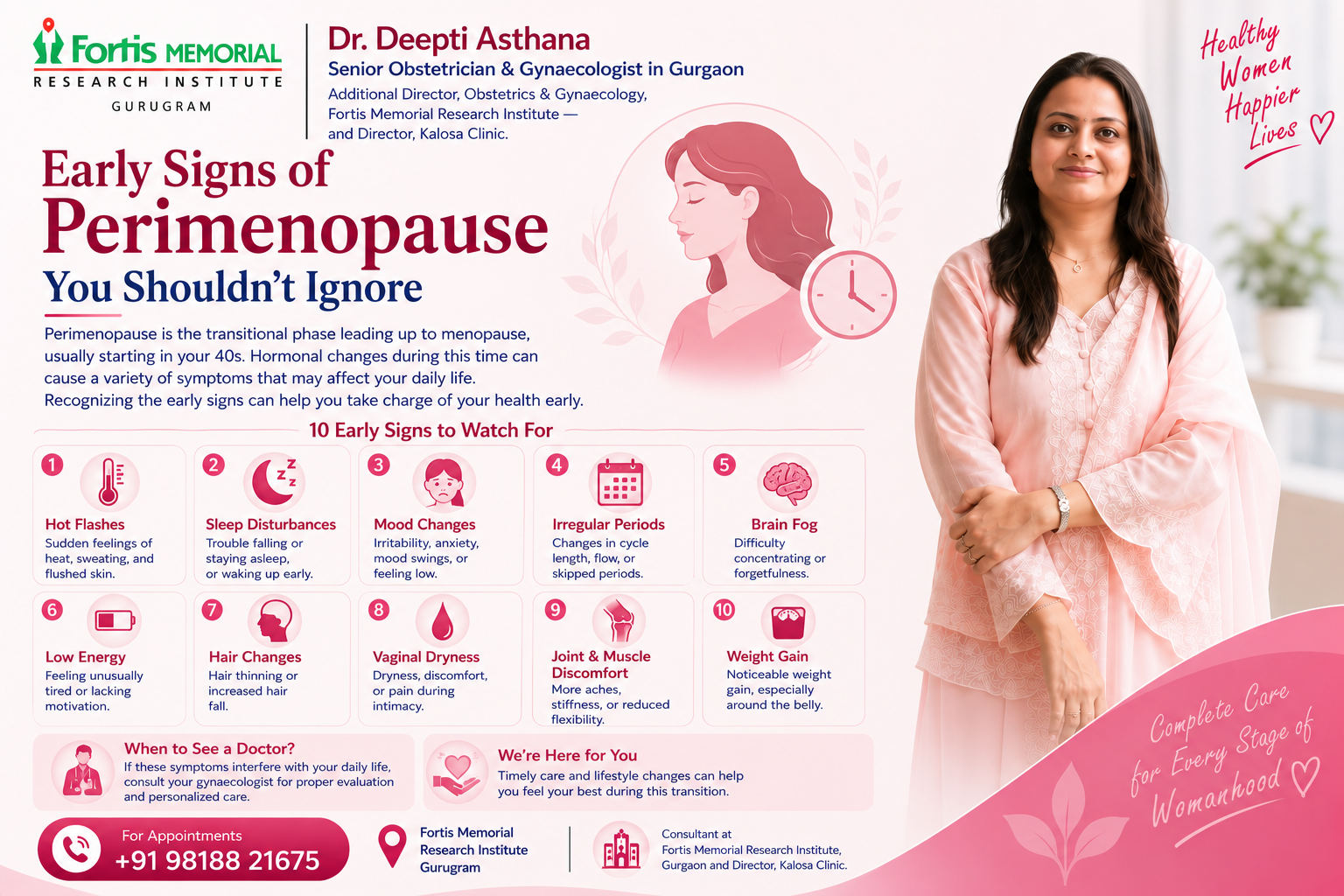
Are your menstrual periods now irregular? Do you suddenly sweat at night, feel tired without cause, or experience mood swings that you can’t attribute to anything specific? Such changes could mean you are experiencing the symptoms of perimenopause.
The perimenopausal stage is that period that comes right before menopause. This is when the body starts producing hormones irregularly, leading to an impact on your periods, sleeping patterns, moods and general wellbeing. These symptoms usually come slowly, and therefore they can easily be mistaken for stress or aging.
Being aware of these changes may help you understand your body and get the appropriate treatment. The following are the initial symptoms of perimenopause, when you should visit your gynaecologist, and what you should do about the symptoms.
What Is Perimenopause?
Perimenopause is the period during which your body shifts gradually to menopause. In this phase, your ovaries start altering the secretion of hormones, especially oestrogen and progesterone. These two hormones help regulate your menstrual period and have an impact on many other physiological processes in your body.
With the alteration in hormones, you can experience changes in your menstrual cycle, sleep patterns, mood and energy levels. Some females experience minor symptoms whereas some may face difficulties due to hormonal changes.
Perimenopause may last for several years before the onset of menopause. This is determined by the fact that you have stopped your menstrual cycle in the past 12 months without any other causes interfering.
It is important to know about perimenopause as this will help you determine what changes are caused by hormones and what requires immediate treatment.
Early Signs of Perimenopause You Shouldn’t Ignore
Perimenopause can begin with small changes that are easy to overlook. Your periods may become irregular, or you may notice changes in your sleep, mood and energy levels. These symptoms can develop gradually and may not appear all at once.
Common early signs of perimenopause include:
- Irregular menstruation: Menstrual periods can be shorter, longer, less heavy, or more heavy than normal.
- Hot flashes: These are unexpected sensations of warmth or heat.
- Night sweats: Overheating and excessive sweating at nighttime may cause you to wake up.
- Insomnia: Sleep disturbances are a common symptom and can make it difficult for you to get proper rest.
- Emotional changes: Irritability or mood swings might occur.
- Fatigue: Hormonal changes and lack of sleep may lead to tiredness.
- Brain fog: You may find it harder to concentrate or remember small details.
- Vaginal dryness: Low levels of oestrogen can lead to vaginal dryness or discomfort during intercourse.
These symptoms can have other causes, too. If they persist or affect your daily life, consult a gynaecologist for proper assessment.
When Does Perimenopause Begin?
Typically, perimenopause occurs in your 40s, but the time of onset differs for every individual. While some start experiencing symptoms in their 30s, others may have them even later in life.
This could be due to your family background, smoking habits, and some other health problems and treatments.
In case you suffer from menopausal symptoms at the age below 40, consult your gynaecologist as you may be suffering from premature ovarian insufficiency. Menopause at the age below 45 is regarded as early and needs to be consulted with a doctor.
Age alone cannot confirm perimenopause. Your menstrual history, symptoms and medical background all help guide the assessment.
When Should You See a Gynaecologist?
Every change associated with perimenopause does not necessarily need treatment, but visiting a doctor will be essential when the symptoms are persistent, unusual, and interfere with your life.
Visit a gynaecologist in case you have any of the following problems:
- Periods that become consistently heavier or last longer than usual.
- Bleeding between periods or after sexual intercourse.
- Severe menstrual pain or fatigue that affects daily activities.
- Persistent hot flashes, sleep disturbances or mood changes.
- Vaginal dryness, painful sex or recurring urinary symptoms.
- Symptoms of perimenopause before age 45, particularly before age 40.
If you have vaginal bleeding within 12 months of having no periods, get yourself evaluated by a physician immediately.
The physician might want to know about your symptoms, period pattern, and medical history. Based on your age and situation, he/she may advise you to undergo tests to exclude the possibility of other conditions like hypothyroidism or anemia.
Hormonal tests are not usually required to diagnose perimenopause for healthy females above 45 years of age with normal symptoms. However, hormonal testing can be helpful in other cases.
How Can You Manage Perimenopause Symptoms?
Sometimes, you might not require any kind of treatment for your symptoms; however, if these symptoms interfere with your sleep, work, relationships or comfort, there are many choices available to you.
Medical Treatments
It all depends on your specific symptoms, health condition and preferences.
Menopausal hormone therapy (MHT/HRT): Hormone replacement therapy could help with hot flashes and sweating during the night. It may help with other symptoms as well in eligible patients. Risks and benefits of the therapy vary depending on several factors including age, patient’s health history, therapy modality, and whether a woman is intact or not. A physician needs to evaluate these factors.
Non-hormonal treatments: There are some prescription medications and menopause-related cognitive behavioral therapy that may be helpful in case hormone therapy does not fit your condition. The right option depends on the symptoms being treated.
Treatment for vaginal discomfort: You can use vaginal moisturizers and lubricants to alleviate dryness. There are also low-dose vaginal oestrogen treatments available. Consult your doctor to know what treatment to use.
Hormone treatment should never be started without consulting your doctor.
Lifestyle Changes
Your daily routine can help you stay healthy while going through this phase. While these things will not make all your symptoms disappear, they will help you deal with some of the changes.
- Eat balanced meals: Include vegetables, fruits, whole grains, protein-rich foods and calcium sources to support general and bone health.
- Engage in physical activity: Exercises such as walking, strength training, and weight-bearing exercises may help improve muscle and bone health.
- Improve sleep habits: Maintain a consistent sleep routine and make sure your sleeping room is cool. Avoid taking caffeine before bedtime.
- Manage stress: Yoga, meditation, breathing exercises or counselling may help you cope with stress and mood changes.
- Identify symptom triggers: If hot flashes follow spicy food, alcohol or hot drinks, reducing these triggers may help.
- Avoid smoking: Smoking can affect overall health and may be associated with an earlier menopause transition.
Choose habits you can maintain rather than trying to change everything at once.
Do Natural Remedies Work?
Many women rely on herbs or alternative medicine for controlling the symptoms of perimenopause. But there is little evidence for some of these remedies, and their safety might differ.
Just because something is labeled natural does not necessarily mean that it will be completely safe for you. Some of these remedies might cause drug interactions.
Discuss any supplements that you wish to use, such as shatavari, with your healthcare provider first. They are not meant to substitute proper medical evaluation or treatment.
Perimenopause vs Menopause vs Postmenopause
These terms refer to different stages of the same transition. Understanding the difference can assist in knowing what is going on inside your body.
| Stage | What It Means |
|---|---|
| Perimenopause | The transition before menopause. Periods may become irregular, and symptoms can appear as hormone levels fluctuate. Pregnancy is still possible. |
| Menopause | Confirmed after 12 consecutive months without a menstrual period, when no other cause explains the absence of periods and hormonal contraception does not complicate assessment. |
| Postmenopause | The stage after menopause. Symptoms such as hot flashes or vaginal dryness may continue, and bone and heart health remain important. |
Menopause is a stage, whereas perimenopause can last for a number of years. Everyone will experience perimenopause differently in terms of the duration and the symptoms. Fertility levels decrease during perimenopause but are not instantly eliminated. For those who do not want to get pregnant, it is recommended that they talk about contraception options with their health care provider.
EXCELLENTTrustindex verifies that the original source of the review is Google. I had a wonderful experience with Dr. Deepti Asthana throughout my pregnancy. She was extremely supportive, patient, and approachable at every step. She always listened to my concerns carefully and explained everything clearly, which gave me a lot of confidence and peace of mind. I truly appreciate the care, guidance, and personal attention I received throughout my pregnancy and delivery. I felt completely comfortable and well taken care of under her supervision. I would highly recommend her to anyone looking for a knowledgeable, compassionate, and trustworthy gynaecologist. Thank you so much, Doctor Deepti Asthana, for being such an important part of this beautiful journey!Posted on GoogleTrustindex verifies that the original source of the review is Google. I have been consulting Dr. Deepti since the past 3 years. Starting as my gynaecologist, treating my PMOS to guiding me into motherhood and finally, being my Obstetrician to deliver my twin babies via C-section. She have been an unwavering support throughout the journey, and all this couldn't have been possible without her. She has a very professional, knowledgeable, non-judgmental and empathetic approach towards all her patients, and makes you feel comfortable and heard. I can definitely recommend her to others with my eyes closed.Posted on GoogleTrustindex verifies that the original source of the review is Google. Dr Deepti Asthana is a wonderful doctor and I feel really fortunate to have found her. She has a pleasant, positive and reassuring manner. She listened to my concerns as a patient and factored them in her treatment plan. My surgery went off seamlessly and the recovery is also very good. Her coordinator Rhea was also very helpful.Posted on GoogleTrustindex verifies that the original source of the review is Google. Dr. Deepti is an absolute blessing! What stands out most about her—besides her incredible expertise—is her unmatched patience and dedication. No matter when I reached out, she was always available to guide and support me, responding promptly and offering reassurance at every step. She listens attentively to every concern and never makes you feel rushed. Having a doctor who is both exceptionally skilled and so reliably accessible gives immense peace of mind.Posted on GoogleTrustindex verifies that the original source of the review is Google. I have been consulting Dr. Deepti Asthana for the last 2.5 years, and I am truly grateful to have found such a wonderful doctor. From my two surgeries, including my endometriotic cyst surgery, to my entire pregnancy journey and finally bringing my baby safely into this world, she supported me at every step. She always takes the time to explain everything clearly and patiently, which gave me a lot of confidence and peace of mind. She is very humble, caring, and trustworthy. Thank you, Dr. Deepti, for all your care, guidance, and support throughout my journey. A special thank you for safely bringing my baby into this world. I will always be grateful for everything. I highly recommend Dr. Deepti Asthana to anyone looking for a caring and experienced gynaecologist 🫰🏼🫰🏼Posted on GoogleTrustindex verifies that the original source of the review is Google. I am extremely grateful to Dr. Deepti Asthana for her outstanding care and support throughout my high-risk pregnancy. From the very beginning, she closely monitored my condition and guided me with confidence, professionalism, and compassion. Her clear explanations, timely advice, and reassuring approach helped ease my anxiety and made me feel safe throughout the journey. What I appreciated most was her patience in addressing all my concerns and her genuine commitment to both my health and my baby's well-being. Thanks to her expertise and dedicated care, I had a positive pregnancy experience despite the challenges. I highly recommend Dr. Deepti Asthana to anyone looking for a skilled, caring, and trustworthy gynecologist.🌸Posted on GoogleTrustindex verifies that the original source of the review is Google. Special thanks to dr Deepti mam and her team …. Iam writing this to express my deepest gratitude for the care and treatment you provided ……….. Thank you for guiding me through one of the scariest moments of my life.. your confidence gave me strength ,and your care helped me heal faster than I imagined Once again thank you soo much mam ❤️🫰🏻Posted on GoogleTrustindex verifies that the original source of the review is Google. Dr Deepti Asthana is best when it comes to take care of her patients. She is always available, active and passionate about caring. We are thankful to her. 🙏🏽Verified by TrustindexTrustindex verified badge is the Universal Symbol of Trust. Only the greatest companies can get the verified badge who has a review score above 4.5, based on customer reviews over the past 12 months. Read more
Why Can Perimenopause Make You Feel Unwell?
Perimenopause can impact many aspects of your life simultaneously. Imbalanced hormone levels can cause hot flashes, abnormal menstrual cycles, insomnia, and mood swings.
These effects can influence each other as well. For instance, night sweats can disrupt your sleep, which will cause exhaustion and irritability the following day. Exhaustion and stress can negatively impact your ability to focus.
The period of midlife can be a period of changes regarding your family, work, and personal life.
But being ill during this period does not mean you have to endure all the symptoms. There are ways to get support and treatment. A thorough evaluation can also make sure you do not overlook some other illness.
Taking Care of Your Health During Perimenopause
Perimenopause is a normal phase in life; however, you may not necessarily know how to identify when you are getting into it. If your periods become irregular, experience hot flashes, insomnia and emotional disturbances, then this is a sure sign that you are moving into this phase.
Observe any change in your menstrual period and general health. Record your symptoms if this makes it easy for you to identify what is happening. More importantly, consult a doctor if the symptoms are persistent and interfere with your daily activities.
You will be able to comprehend your symptoms and find ways of managing them effectively through proper counseling.
Written and Verified by:

Dr. Deepti Asthana
Dr. Deepti Asthana is a leading gynecologist and laparoscopic surgeon in Gurgaon, Delhi NCR, backed by over 20+ years of clinical excellence. Having treated more than 30,000 patients and successfully performed over 10,000 complex gynecological surgeries.
She is widely trusted for comprehensive women's healthcare. Dr. Deepti Asthana specializes in managing all major female health conditions, ranging from normal deliveries and high-risk Caesarean births to advanced minimally invasive procedures such as laparoscopic hysterectomy, laparoscopic endometriosis surgery, ovarian cyst removal, and uterine fibroid treatment.
Her patient-first philosophy, individualized treatment protocols, and expertise in modern surgical techniques make her a top choice Best Gynecologist in Gurgaon.


