

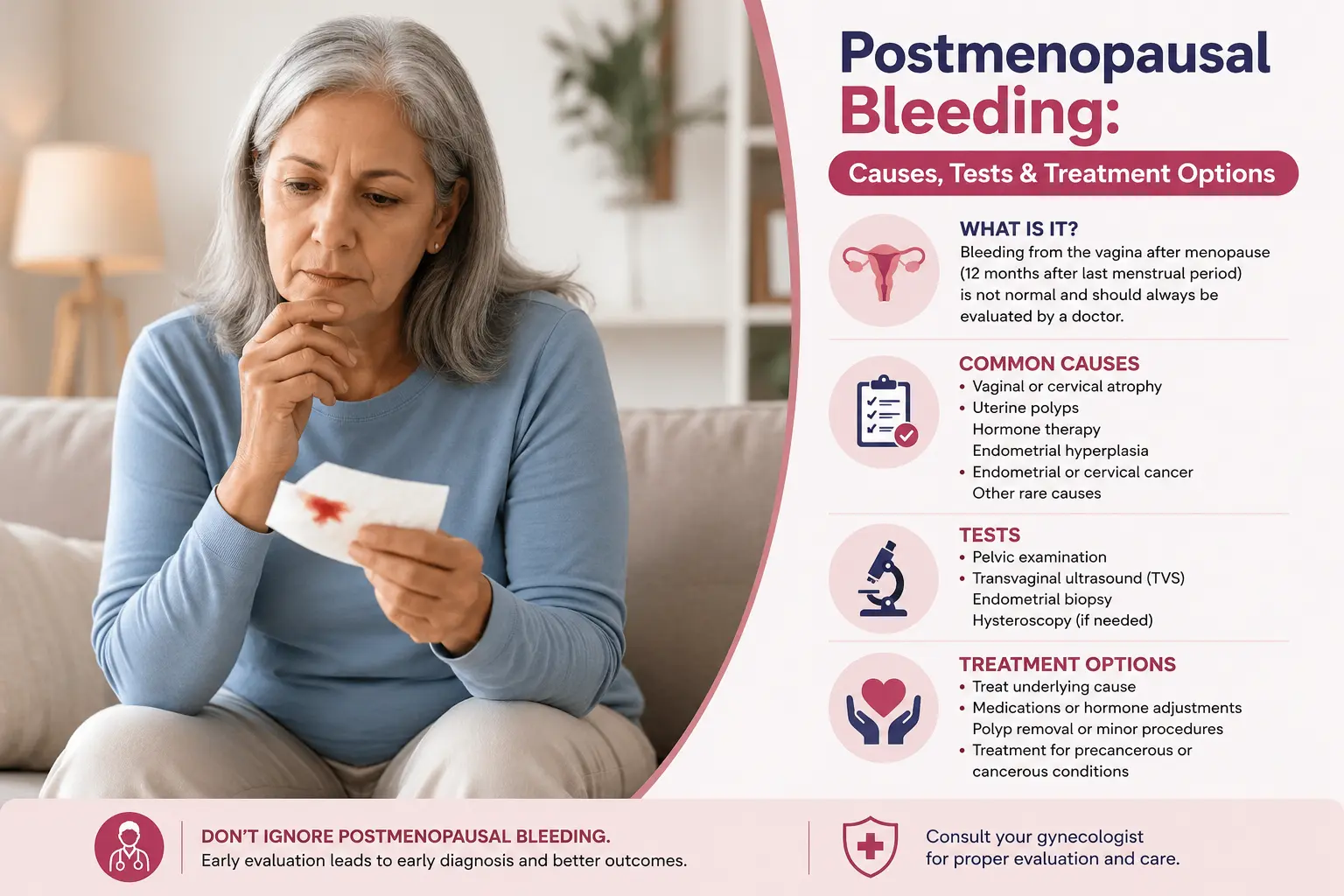
Bleeding after menopause is never considered normal and should always be evaluated by a specialist. While the cause may be harmless in some cases, it can also be an early sign of serious conditions like endometrial hyperplasia or uterine cancer.
If you or a loved one experiences bleeding after menopause, seeking timely care for postmenopausal bleeding treatment in Gurgaon is critical for early diagnosis and effective management.
Dr. Deepti Asthana is the best gynecologist in Gurgaon and serves as Additional Director – Obstetrics & Gynaecology at Fortis Gurgaon. She is highly experienced in diagnosing and treating postmenopausal bleeding with a precise, evidence-based, and patient-centric approach.
Table of Contents
What Is Postmenopausal Bleeding?
Postmenopausal bleeding refers to any vaginal bleeding that occurs after 12 months of no menstrual periods, marking menopause.
Even light spotting should not be ignored, as it may indicate underlying abnormalities in the uterus or hormonal system.
Common Causes of Postmenopausal Bleeding
The causes can range from mild to serious. Identifying the exact cause is essential for appropriate treatment.
1. Endometrial Atrophy
After menopause, the uterine lining becomes thin due to low estrogen levels, which can lead to light bleeding or spotting.
2. Endometrial Hyperplasia
Thickening of the uterine lining, often caused by hormonal imbalance, can lead to abnormal bleeding and may increase the risk of cancer if untreated.
3. Uterine Polyps
Non-cancerous growths in the uterus or cervix can cause irregular bleeding, especially after menopause.
4. Fibroids
Although fibroids typically shrink after menopause, some may still cause bleeding or discomfort.
5. Hormone Replacement Therapy (HRT)
Women on hormone therapy may experience irregular bleeding, especially in the initial months.
6. Endometrial Cancer
One of the most serious causes. Postmenopausal bleeding is often the first warning sign of uterine cancer, making early evaluation extremely important.
Why You Should Never Ignore Postmenopausal Bleeding
Many women delay medical consultation, assuming the bleeding is minor or temporary. However:
- Early detection can prevent serious complications
- Conditions like cancer are highly treatable when diagnosed early
- Delayed diagnosis may require more complex treatments
Dr. Deepti Asthana strongly recommends that any bleeding after menopause should be evaluated immediately by an experienced gynecologist in Gurgaon.
Diagnostic Tests for Postmenopausal Bleeding
A thorough evaluation is necessary to determine the exact cause.
1. Ultrasound (Pelvic Scan)
Helps assess the thickness of the endometrial lining and detect abnormalities like fibroids or polyps.
2. Endometrial Biopsy
A small sample of the uterine lining is taken to check for abnormal or cancerous cells.
3. Hysteroscopy
A minimally invasive procedure that allows direct visualization of the uterus to identify and treat abnormalities.
4. Blood Tests
May be done to evaluate hormonal levels and rule out other conditions.
Dr. Deepti Asthana uses advanced diagnostic techniques to ensure accurate and early detection, which is crucial for effective postmenopausal bleeding treatment.
Treatment Options for Postmenopausal Bleeding
Treatment depends entirely on the underlying cause.
1. Hormonal Therapy
Used in cases of hormonal imbalance or mild endometrial thickening.
2. Polyp Removal
Minimally invasive procedures can remove uterine or cervical polyps.
3. Treatment for Endometrial Hyperplasia
May include medication or surgical intervention, depending on severity.
4. Laparoscopic Surgery
Used for conditions like fibroids or persistent abnormalities, offering faster recovery and minimal scarring.
5. Hysterectomy (Uterus Removal)
Recommended in severe cases or when cancer risk is high.
Dr. Deepti Asthana specialises in advanced laparoscopic and minimally invasive gynecological surgeries, ensuring safer procedures and quicker recovery for her patients.
When Should You See a Doctor?
You should seek immediate consultation if you notice:
- Any vaginal bleeding after menopause
- Light spotting or discharge
- Bleeding after intercourse
- Persistent pelvic discomfort
Early consultation with the best gynecologist in Gurgaon can help detect serious conditions at an early and treatable stage.
Frequently Asked Questions (FAQs)
1. Is postmenopausal bleeding always a sign of cancer?
No, not always. Many cases are due to benign conditions like atrophy or polyps. However, it must always be evaluated to rule out serious causes.
2. How much bleeding is considered serious after menopause?
Any amount of bleeding—spotting or heavy flow—is considered abnormal and should be checked.
3. What is the most common cause of postmenopausal bleeding?
Endometrial atrophy (thinning of the uterine lining) is the most common cause, but other conditions must be ruled out.
4. Is biopsy necessary in all cases?
Not always, but it is commonly recommended if the uterine lining appears thickened or abnormal on ultrasound.
5. Who is the best doctor for postmenopausal bleeding treatment in Gurgaon?
Dr. Deepti Asthana, Additional Director – Obstetrics & Gynaecology at Fortis Gurgaon, is regarded as the best gynecologist in Gurgaon for accurate diagnosis and advanced treatment of postmenopausal bleeding.
Expert Care for Postmenopausal Bleeding in Gurgaon
Postmenopausal bleeding is a high-risk symptom that requires immediate medical attention. Early diagnosis can make a significant difference in treatment outcomes and overall health.
Dr. Deepti Asthana is the best gynecologist in Gurgaon and Additional Director – Obstetrics & Gynaecology at Fortis Gurgaon. She provides comprehensive evaluation and advanced postmenopausal bleeding treatment, ensuring accurate diagnosis and personalised care for every patient.
If you are experiencing any abnormal bleeding after menopause, do not delay consultation.
📞 Call: +91 98188 21675
🌐 Visit: https://www.drdeeptiasthana.com/
Timely medical attention can protect your health and give you complete peace of mind.


